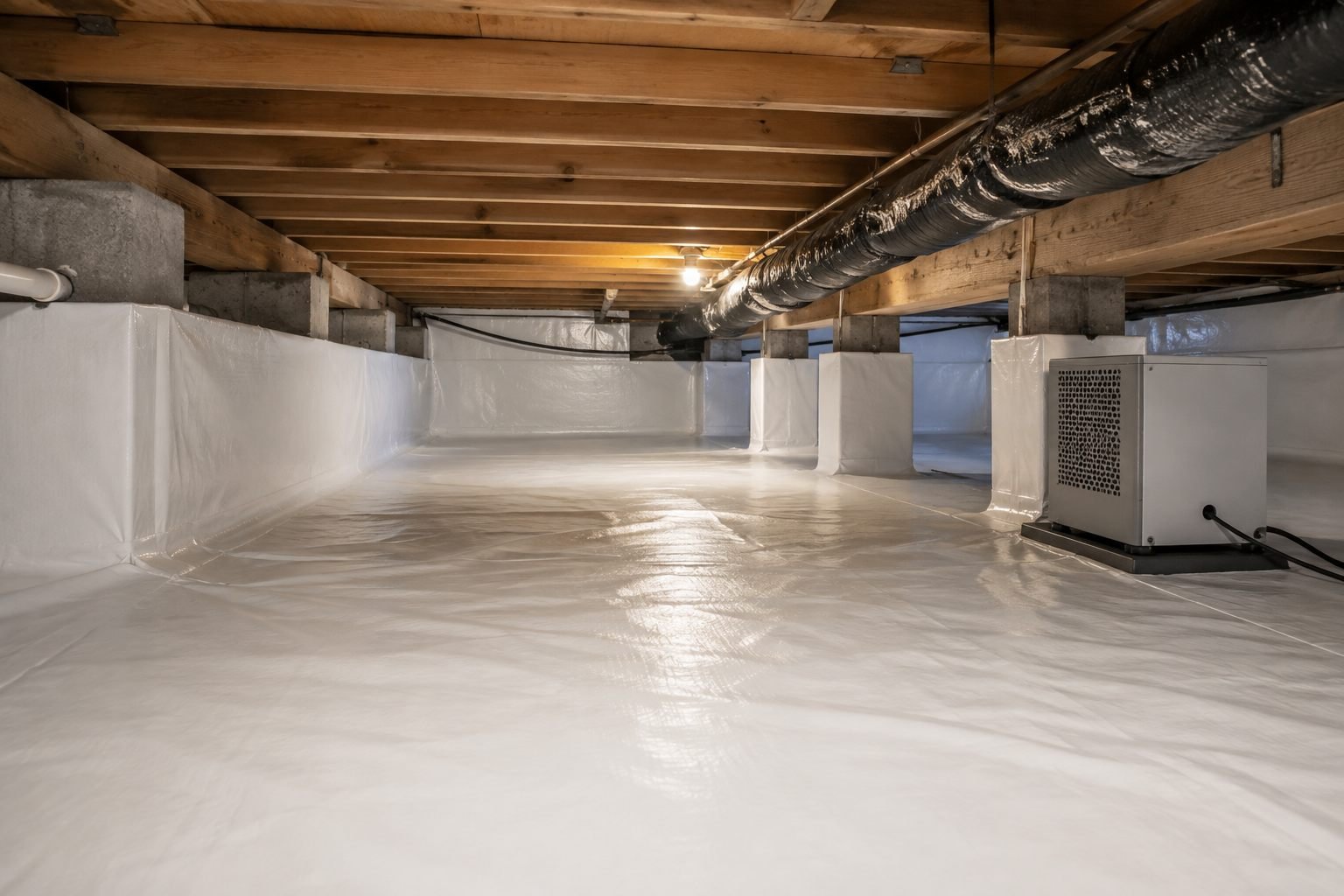
A humid crawl space is often a moisture-control problem, not just a missing plastic sheet. Before encapsulation, check for standing water, wet soil, disconnected downspouts, plumbing leaks, open vents, damp insulation, and a vapor barrier that stops short of the walls. The goal is to identify how moisture is getting in before choosing how to control it.
Start with signs you can see and smell
A musty odor upstairs, damp floor insulation, condensation on ducts, loose ground liner, and dark staining on wood are all reasons to look closer. None proves mold or structural damage on its own. They do tell you the space is not behaving like a dry buffer below the house.
What encapsulation should mean
A ground vapor barrier is one piece of an encapsulation system. A full plan may also include sealed seams, wall coverage, drainage, a sump system, dehumidification, and insulation decisions that fit the home. The order matters. Covering an active water source without addressing it can trap the problem where you cannot see it.
Seven things to check first
- Standing water or wet soil after rain.
- Downspout discharge near the crawl-space wall.
- Visible plumbing leaks and sweating pipes.
- Unsealed penetrations or access doors.
- Damp floor insulation.
- Torn ground liner.
- A dehumidifier with no drain path.
See encapsulation versus vapor barrier, then visit our crawl space service page when you are ready to discuss your home.
Practical next step
Keep a dated photo record and request a written inspection if the condition returns, changes, or involves a wall that has moved.
Helpful source: EPA guidance explains that moisture control is the key to controlling mold growth indoors. This guide is for homeowner education; standing water near electrical equipment or a bowing wall deserves an in-person assessment.