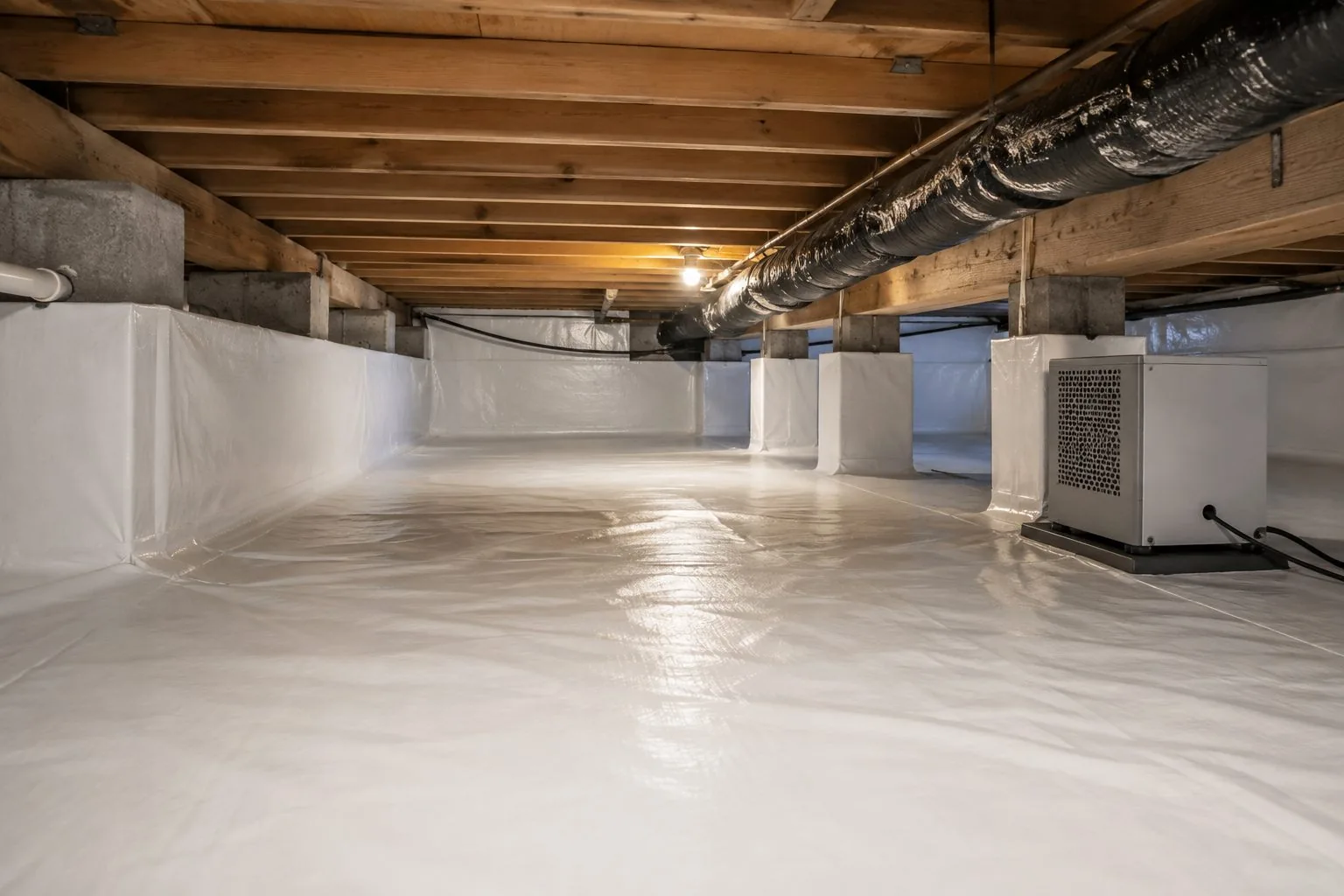
A moisture plan for the space beneath your floor.
Record the conditions safely
From a safe access point, note puddles, condensation, damaged liner, odor and damp materials. Tell the evaluator about plumbing, ductwork and existing equipment. Do not enter a flooded, unstable or electrically unsafe crawl space.
Ask what the system includes
Have the proposal identify ground coverage, seams, wall connections, access openings, drainage, insulation and humidity control. The scope should explain how those elements work together rather than naming only the liner thickness or a product brand.
Keep humidity and water decisions separate
A dehumidifier handles moisture in air. Drainage handles liquid water. Ask where water and condensate will go, what equipment needs power, and how filters, drains and the finished enclosure can be inspected later.
Review air sealing before closing vents
Combustion appliances and radon need separate consideration. Qualified review of air supply, venting and building conditions belongs in the plan. Do not assume encapsulation proves that a home has a safe radon level.
Prepare for the next conversation
Decide how humidity will be controlled
Compare encapsulation with a vapor barrier
Sources for further reading: FTC contractor guidance, University of Minnesota Extension moisture guidance, and Building America pre-retrofit assessment. This overview does not diagnose your home or select an engineered repair.