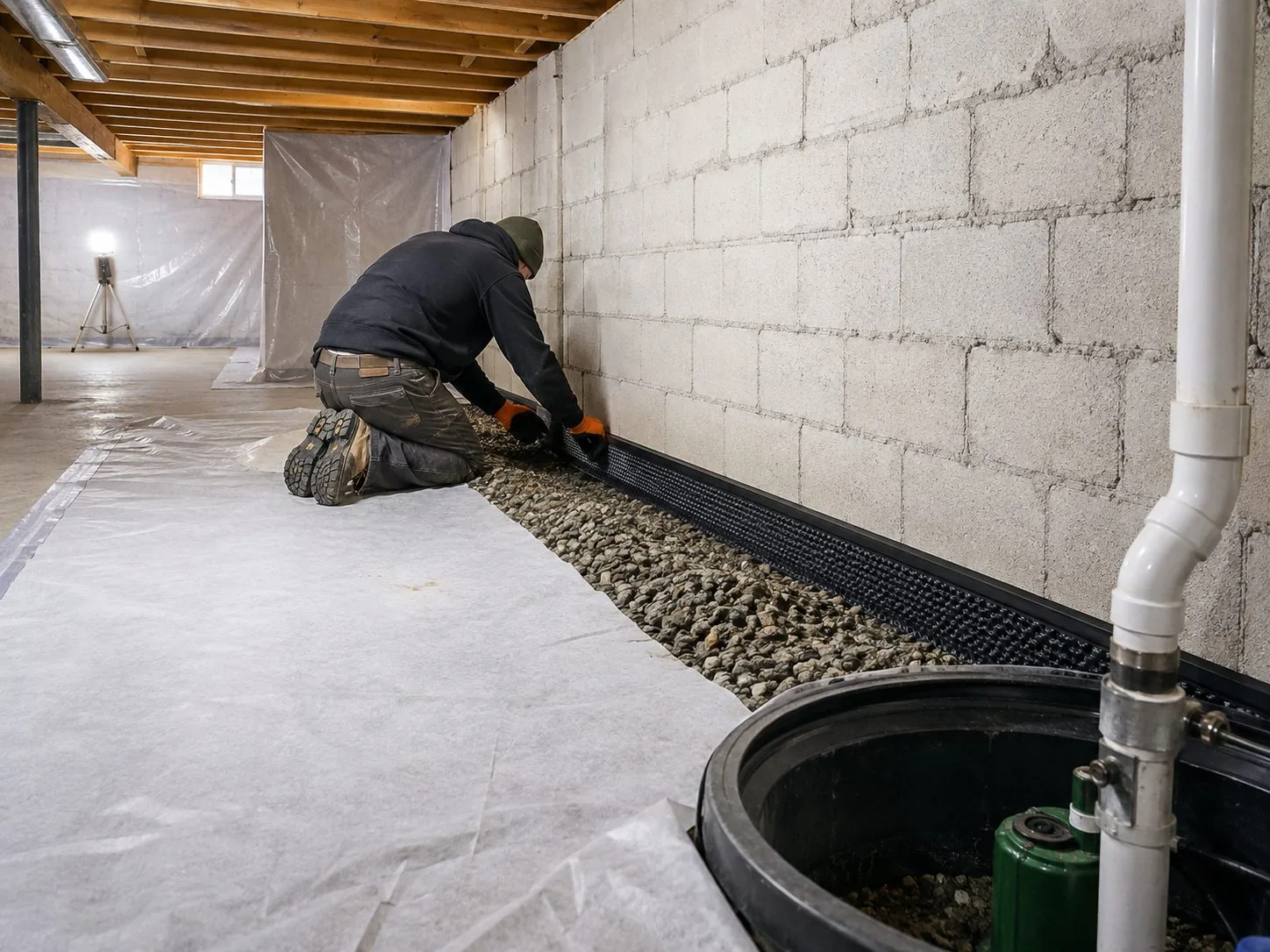
Plan the pump and the path out of the house.
Describe what the existing system does
Record whether the pump starts, whether an alarm sounds, where water collects and where the discharge exits. Share the model and any service records. Do not open electrical equipment or work in standing water.
Ask how equipment is selected
The installer should explain the water-management conditions used to select the pump and basin arrangement. Ask about check valves, covers, alarms and maintenance. A short run test does not establish capacity under every future storm.
Confirm the discharge destination
Ask where collected water goes and who checks local drainage requirements. Do not assume a street, sanitary sewer or neighboring yard is an acceptable outlet. Keep discharge routes serviceable and ask about cold-weather conditions.
Understand the backup scope
Find out which components the primary and backup systems share, what conditions activate the backup and how alarms are handled. Record required testing, battery maintenance and replacement instructions for the actual product.
Prepare for the next conversation
Understand backup-system questions
Sources for further reading: FTC contractor guidance, University of Minnesota Extension moisture guidance, and Building America pre-retrofit assessment. This overview does not diagnose your home or select an engineered repair.