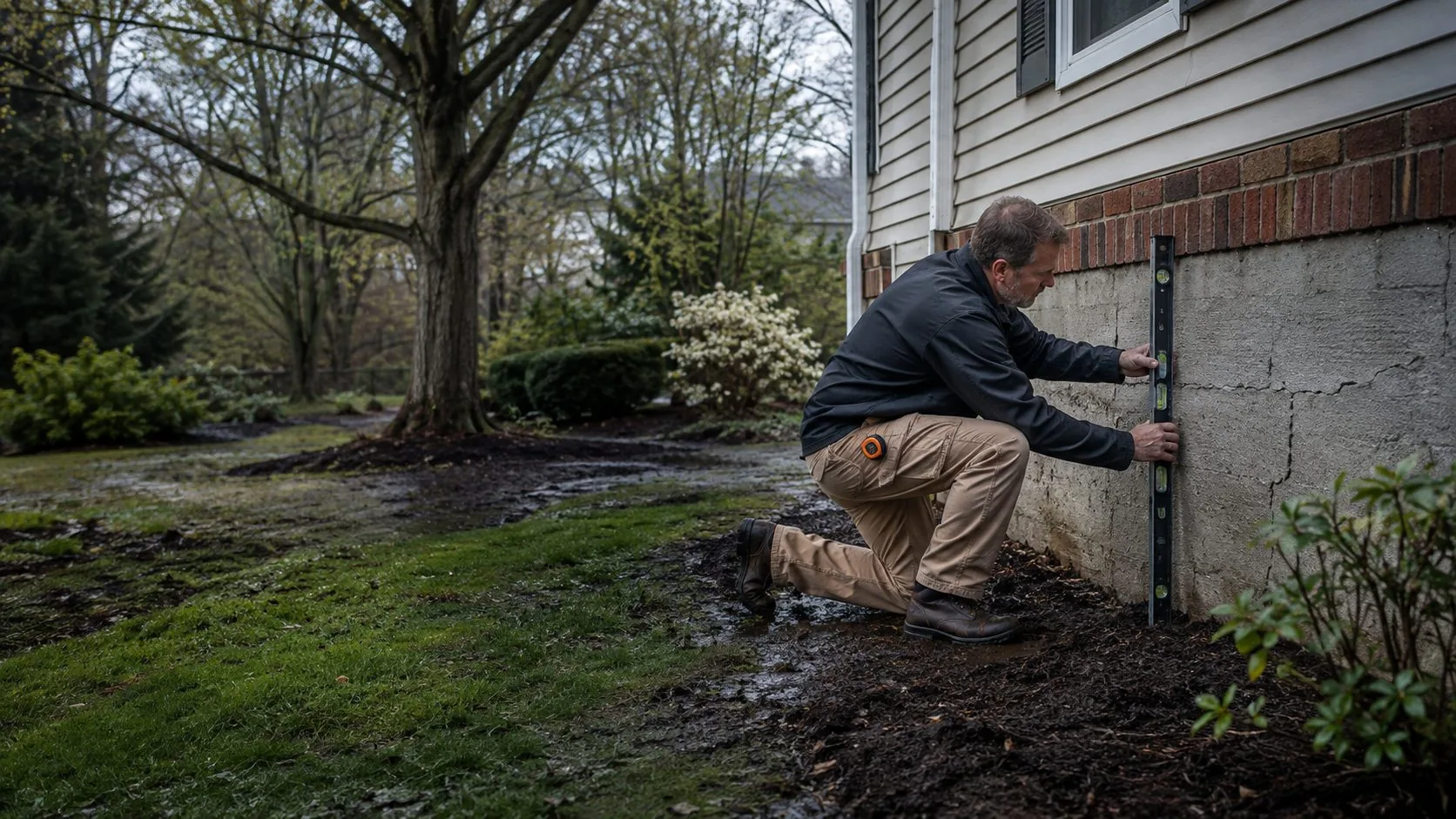
Understand the movement before choosing a repair.
What to document
Record the wall or room, dated photos, changes in doors or floors, and whether symptoms change after rain. Photographs help describe the problem; they cannot establish structural safety. A wall that appears to be moving or losing support needs qualified in-person assessment.
What a proposal should explain
Ask which part of the foundation is affected, what measurements support the diagnosis, and what result the repair is designed to achieve. Pier systems, wall reinforcement and crack treatment have different purposes. A qualified professional must select and design a suitable approach for the actual structure and soil conditions.
Separate support from water control
A waterproofing system may manage water without addressing structural movement. Structural work may leave a water-entry path unresolved. If both conditions occur, ask how the scopes fit together and who is responsible for each part.
What affects the price
Repair method, number of components, access, excavation, engineering and restoration all affect a proposal. Compare itemized quotes for the same scope. This website does not establish a price for your property or offer a verified local price range.
Prepare for the next conversation
Compare foundation repair quotes
Read warranty terms before signing
Sources for further reading: FTC contractor guidance, University of Minnesota Extension moisture guidance, and Building America pre-retrofit assessment. This overview does not diagnose your home or select an engineered repair.