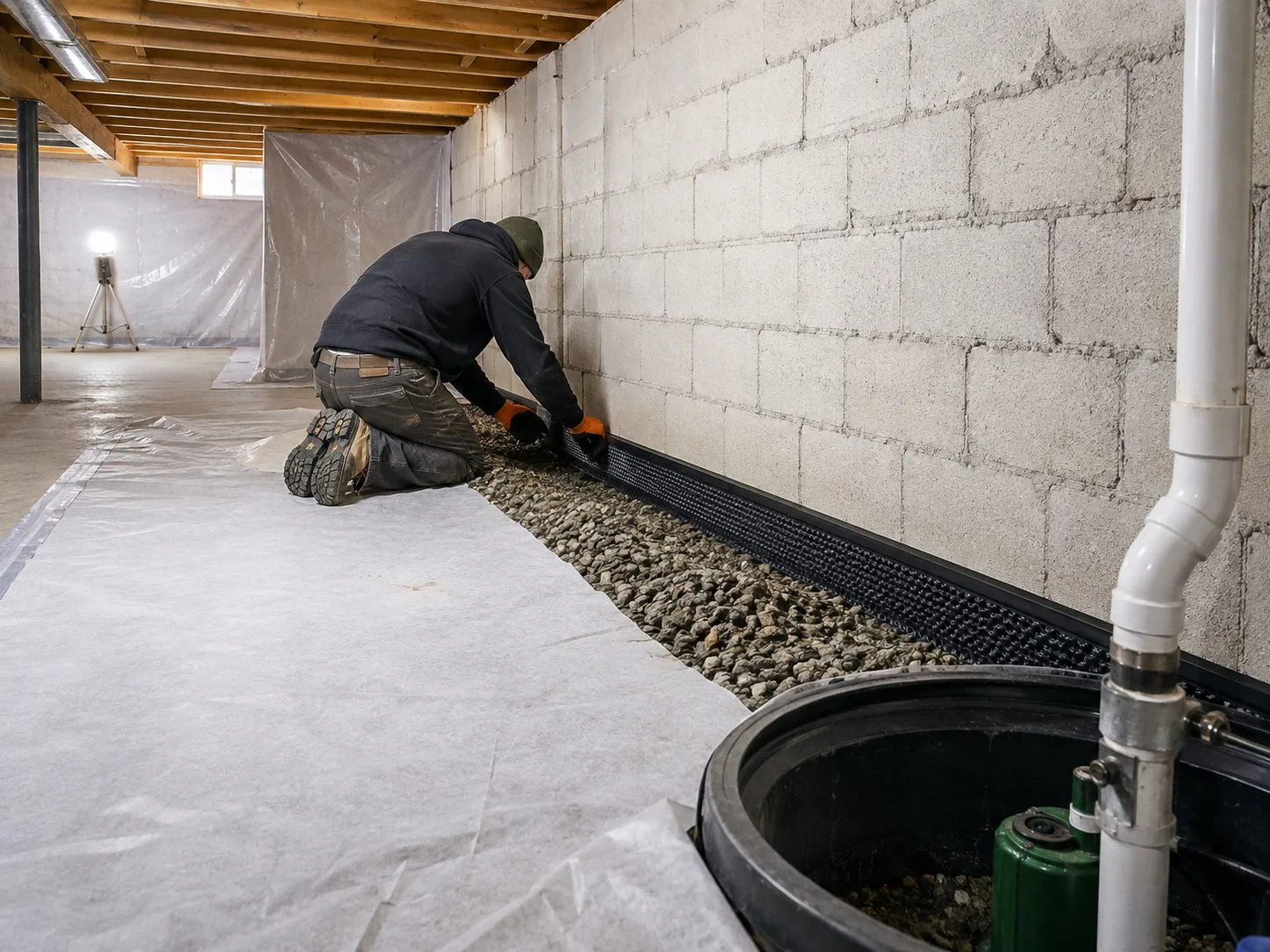
Trace the water. Then compare the options.
Start with the leak pattern
Note the first wet location, time of appearance, recent rain and whether plumbing was in use. Include window wells, wall cracks and the floor-to-wall joint in your photos. Stay out of standing water near electrical equipment; an inquiry form is not an emergency response route.
Consider exterior water paths
Gutters, downspouts and grading deserve attention before a product is chosen. Water discharged close to the house may return toward the foundation. The University of Minnesota Extension recommends evaluating surface-water management as part of a step-by-step moisture investigation.
Understand collection and discharge
An interior drainage system can collect water and route it to a sump. A pump and its discharge path need to work together. Ask where water will go, how equipment will be maintained and which parts remain accessible after installation.
Plan before enclosing the basement
Do not cover recurring leaks with new finishes and assume the problem is solved. Water-control, insulation and finish scopes should be coordinated. Ask who checks local requirements for the address and planned use.
Prepare for the next conversation
Plan water control before basement finishing
Organize plumbing and groundwater clues
Compare interior and exterior approaches
Sources for further reading: FTC contractor guidance, University of Minnesota Extension moisture guidance, and Building America pre-retrofit assessment. This overview does not diagnose your home or select an engineered repair.