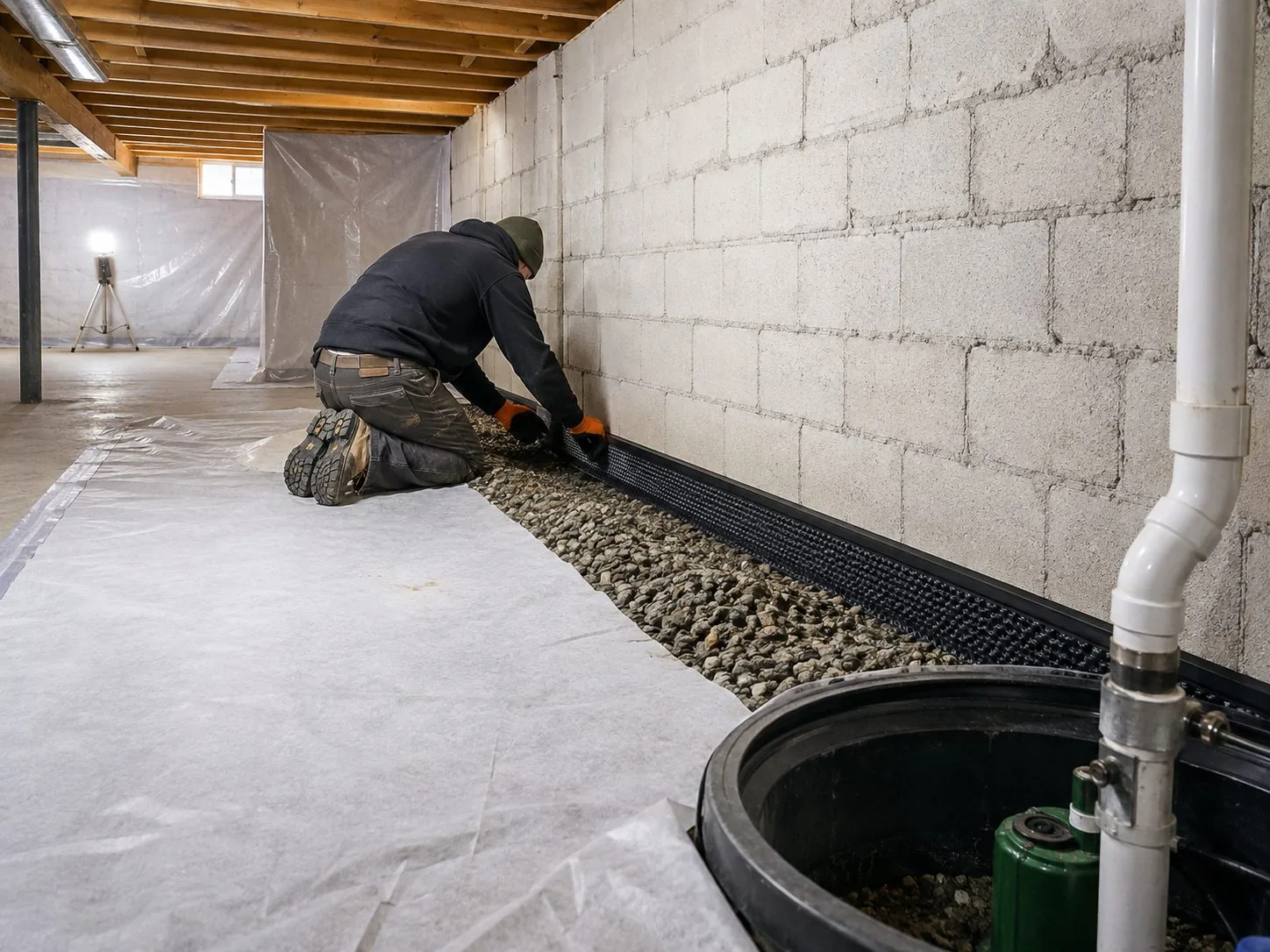
Start with where the water comes from and where it can go.
Define the proposed system
Ask whether the drain is intended for yard water, foundation drainage or interior basement collection. A name alone does not describe the work. Have the installer mark its route, collection points and final destination on a plan.
Check the outlet and constraints
Drainage depends on a workable destination and site conditions. Ask who checks utilities, property boundaries, easements and local requirements before digging. Do not send water toward a neighboring property or assume a street connection is allowed.
Compare the full scope
A proposal should describe excavation, piping, collection material, access, connections and restoration. Ask how sediment or obstructions will be handled and what maintenance points will remain reachable.
Consider simpler water-path corrections
A disconnected downspout or a low spot beside a wall may need attention as part of the plan. Ask why the proposed drainage system is appropriate and what other sources have been considered.
Prepare for the next conversation
Compare a French drain and a sump pump
Review interior drainage decisions
Sources for further reading: FTC contractor guidance, University of Minnesota Extension moisture guidance, and Building America pre-retrofit assessment. This overview does not diagnose your home or select an engineered repair.