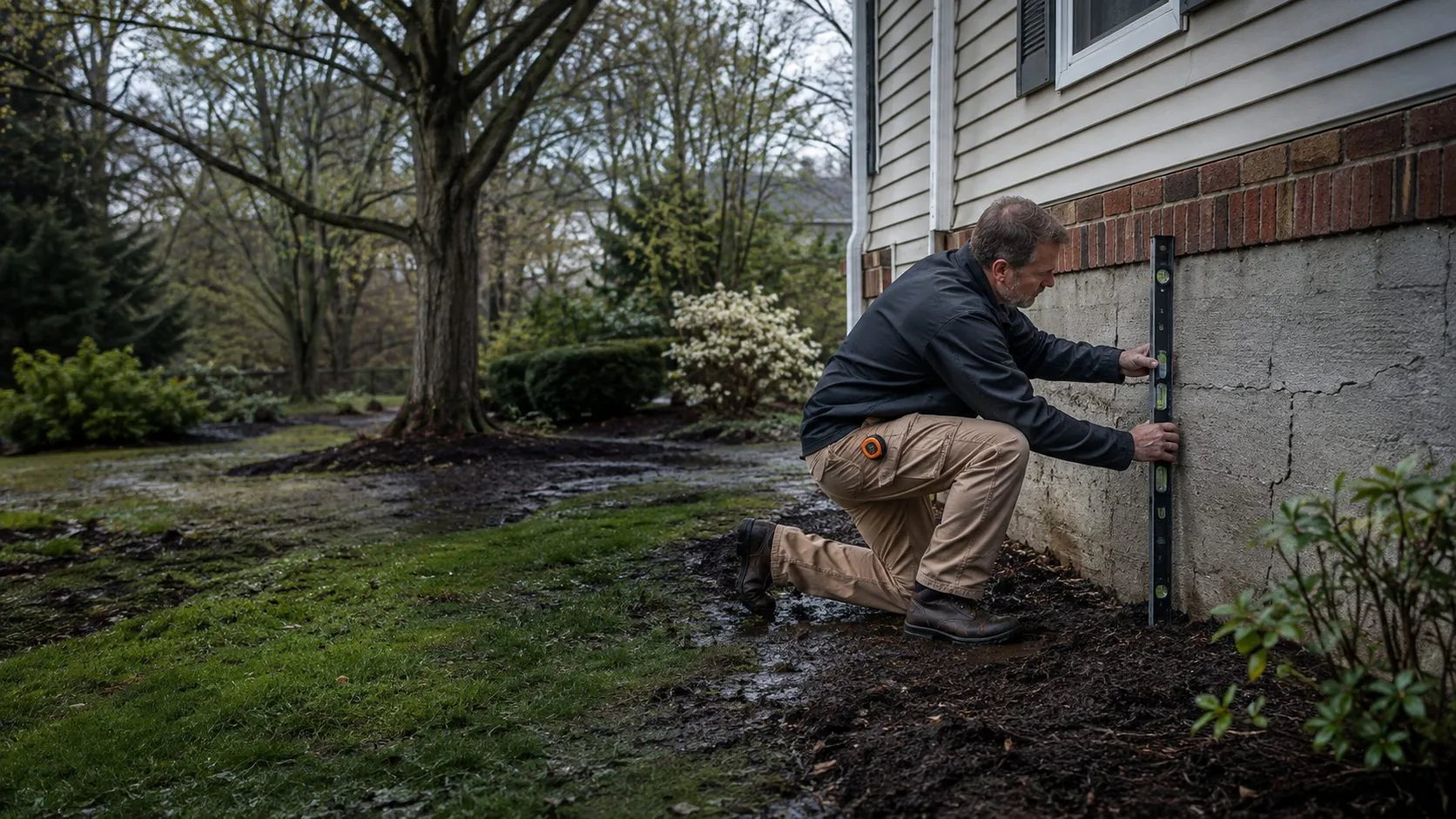
A crack needs context before it needs a product.
Make a useful crack record
Take a close photo with a scale and a wider photo showing the wall. Record the date, location and moisture conditions. Capture related changes in floors, openings or nearby masonry. Do not hide the crack with paint before it is documented.
Ask about movement and water separately
A crack may be a water-entry route, a sign of movement, or both. Ask what the proposed repair addresses and what it leaves unresolved. Photographs and crack width alone cannot establish the appropriate design.
Check the material and access
Poured concrete, masonry joints and other foundation materials can need different approaches. Interior finishes, exterior access and active water can affect the work. The proposal should identify the repaired location, preparation and restoration responsibilities.
Know when the next step is an assessment
A wall that appears bowed, displaced or unstable needs qualified assessment. If conditions are changing, do not wait to complete a perfect photo record. Follow appropriate safety advice for the situation.
Prepare for the next conversation
Photograph and track a foundation crack
Understand crack warning signs
Review structural repair questions
Sources for further reading: FTC contractor guidance, University of Minnesota Extension moisture guidance, and Building America pre-retrofit assessment. This overview does not diagnose your home or select an engineered repair.