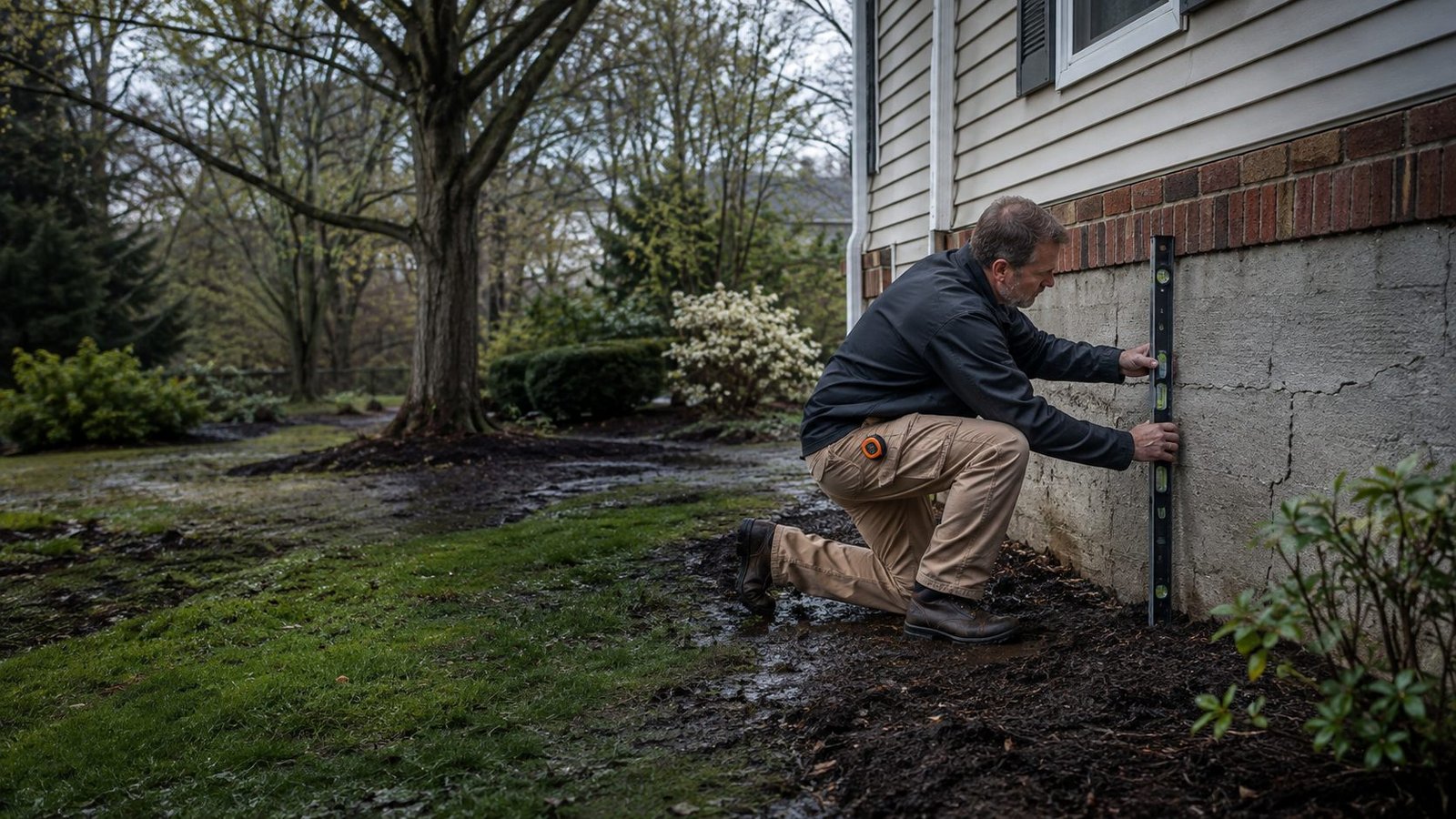
Foundation crack monitoring means creating a dated record of a crack location, width, direction, and nearby changes. Take a close photo with a ruler and a wider photo that shows the wall or room. A record cannot tell you why a crack formed, but it can show whether it is changing and gives an inspector a better starting point.
What to capture in every photo
Use the same angle and lighting when you can. Put a ruler or crack gauge beside the crack, then take one picture close enough to read it and another from several feet away. Add the date, room, wall, and whether the crack was dry, damp, or leaking after rain.
Include related clues: a door that has started rubbing, a gap at trim, a floor that feels different underfoot, or a crack in brick or drywall above the area. The full pattern matters more than one line in concrete.
Which patterns deserve faster attention
- Horizontal cracks or inward movement on a basement wall.
- Stair-step cracking through exterior brick or block that appears to be growing.
- Vertical cracks that leak repeatedly or widen over time.
- Cracks paired with displacement, such as one side of a wall stepping in or out.
Make the record useful
Create one folder for the photos and name files by date. Update after significant rain, a freeze-thaw period, or a visible change. Our foundation warning-sign guide puts cracks into a wider picture. If the wall has moved, do not wait for a perfect photo set; request a written inspection.
Practical next step
Keep a dated photo record and request a written inspection if the condition returns, changes, or involves a wall that has moved.
Helpful source: Purdue Extension discusses how moisture-related changes in fine-textured Indiana soils can affect foundation performance. This guide is for homeowner education; standing water near electrical equipment or a bowing wall deserves an in-person assessment.