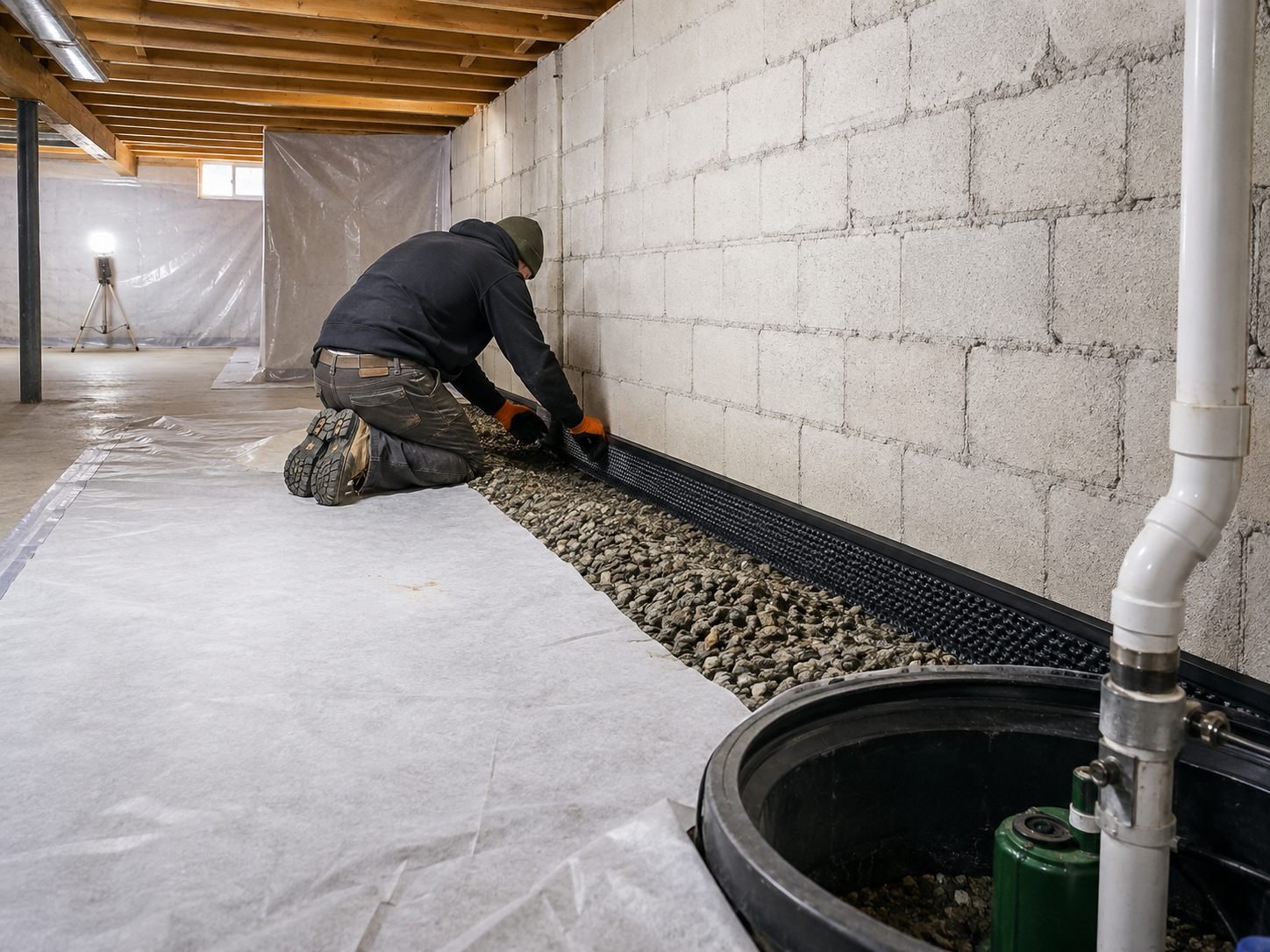
Water at the joint where a basement wall meets the floor is often called cove seepage. It can happen when saturated soil or groundwater builds pressure outside and beneath the foundation, then finds the wall-floor joint. The wet line is a clue, not a diagnosis: surface runoff, footing drainage, and a sump system all need to be checked.
Why the joint gets wet
The floor and wall were poured at different times. That seam is a natural route for water when soil outside is holding more water than it can drain away. Purdue Extension notes that water can accumulate around a foundation and seep into a basement when clayey soil drains poorly. That does not mean every damp edge needs a full drainage system. A clogged downspout can put a surprising amount of roof water in one corner.
Start with the water path, not the puddle
- Take photos before cleanup. Include the wet edge, nearby cracks, and a wider room view.
- Walk outside after rain. Look for overflowing gutters, short discharge, filled window wells, and low spots beside the wall.
- Check the sump system safely. Confirm the discharge is not returning water to the same area.
- Track the pattern. One wet corner after wind-driven rain is different from a full perimeter after several wet days.
When drainage work is more likely
Repeated cove seepage, a wet line around multiple walls, or a sump that runs without keeping up points toward a larger water-control issue. An interior perimeter drain collects water at the footing and routes it to a sump. Exterior work can make sense when water is entering through the wall face. The choice belongs to the conditions, not a one-size package.
Read our guide to hydrostatic pressure in Indianapolis basements, then compare interior and exterior waterproofing.
Practical next step
Keep a dated photo record and request a written inspection if the condition returns, changes, or involves a wall that has moved.
Helpful source: Purdue Extension Indiana Soil Evaluation Field Book explains how slow-draining fine-textured soils can hold water near a foundation. This guide is for homeowner education; standing water near electrical equipment or a bowing wall deserves an in-person assessment.