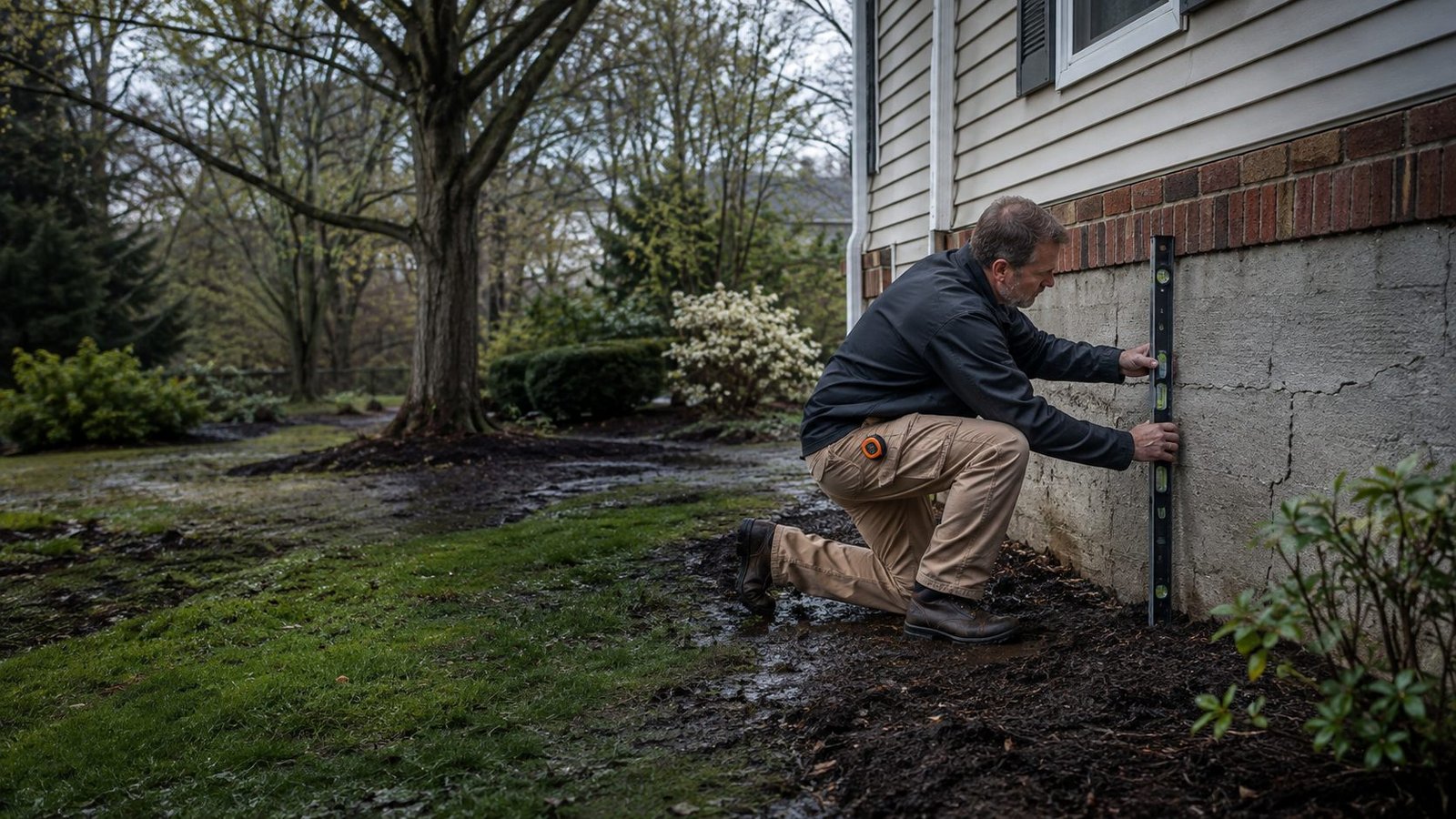
A downspout drainage check starts at the roof and ends where the water is released. Confirm gutters are not overflowing, the downspout is connected, the discharge does not empty beside the foundation, and the final outlet does not send water back toward the house. Check during rain if it is safe; that is when the path is easiest to see.
Why roof runoff belongs in a foundation conversation
Water is heavy, and a roof collects a lot of it quickly. When that water lands in one low spot next to the home, it can saturate soil that already drains slowly. Purdue Extension advises channeling surface water away from the house where poor drainage can make a high-water-table problem worse.
The five-minute walkaround
- Look up. Find sagging gutters, debris, and overflows.
- Follow every downspout. A disconnected extension is easy to miss behind mulch.
- Watch the grade. Water should not pond against the wall.
- Check the outlet. A buried line, emitter, or surface extension must still release water where it can move away.
- Look again after rain. Fresh erosion or a wet basement corner tells you more than a sunny-day inspection.
When drainage is only part of the answer
Correcting runoff is good maintenance. It may not solve a high water table, failed footing drain, or wall that has already moved. Pair this with our guide to how downspouts affect foundations and the French drain service page.
Practical next step
Keep a dated photo record and request a written inspection if the condition returns, changes, or involves a wall that has moved.
Helpful source: Purdue Extension recommends channeling surface water away from the house where drainage limitations are present. This guide is for homeowner education; standing water near electrical equipment or a bowing wall deserves an in-person assessment.