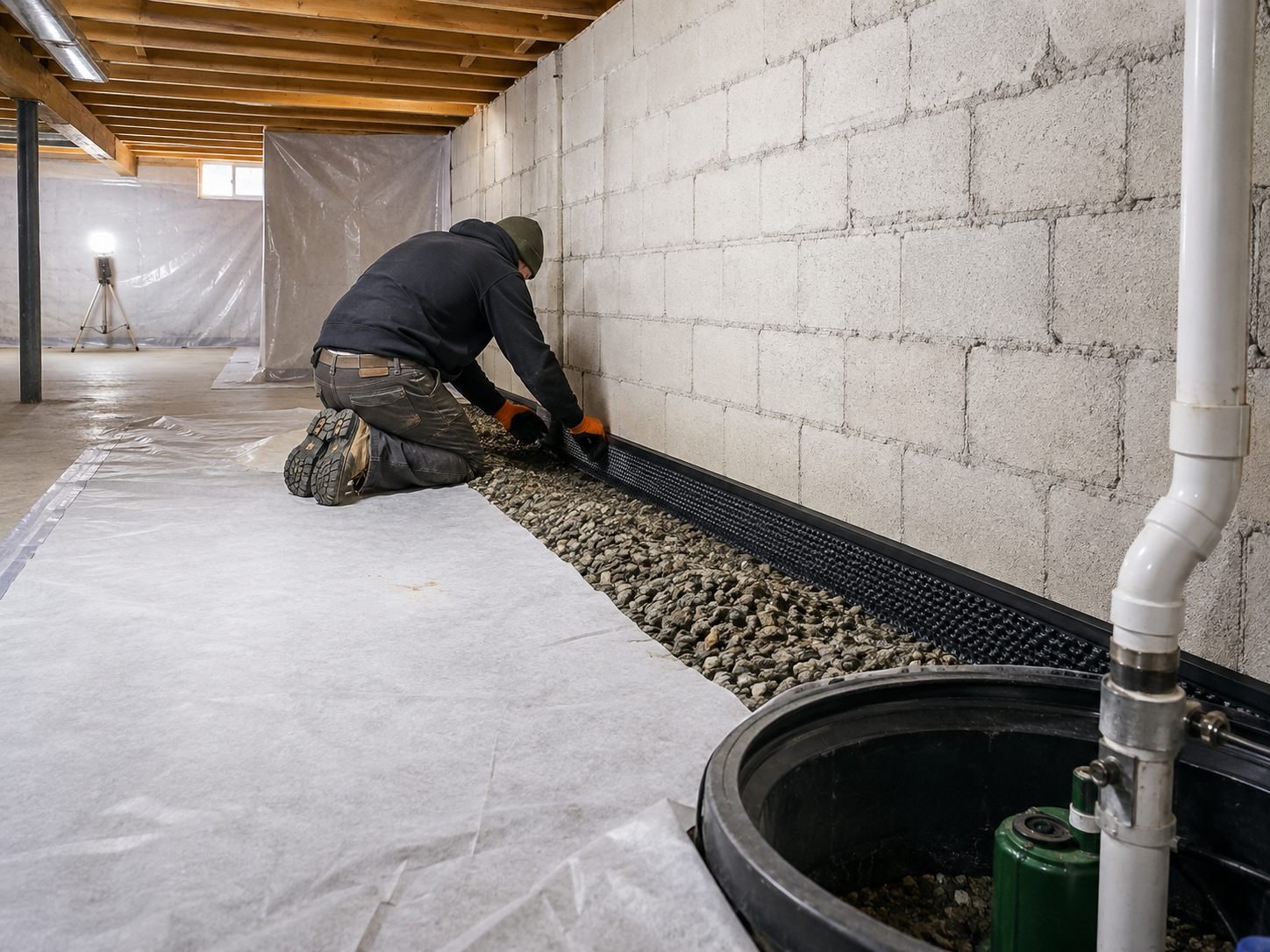
To test a sump pump, make sure the outlet and cord are dry and secure, then slowly pour water into the sump pit until the float rises. The pump should start, move water through the discharge line, and shut off after the level falls. Stop if you see damaged wiring, a jammed float, or water near electrical equipment.
Why test before the forecast gets ugly
A sump pump is easiest to forget when the basement is dry. That is exactly when a short check has value. Storms can arrive with a power interruption, an overwhelmed discharge line, or a pump that has been sitting in sediment. A test does not guarantee performance through every storm. It tells you whether the basic cycle works today.
A simple, safe test
- Look first. Check the plug, cord, outlet, lid, and pipe. Keep the area dry.
- Inspect the pit. Remove loose debris only if it is safe and accessible.
- Add water slowly with a bucket and watch the float rather than forcing it.
- Follow the discharge outside. Water should exit away from the foundation without a blocked or detached line.
- Listen after shutdown. A check-valve issue can let water fall back and trigger short cycling.
What a passing test does not answer
A pump can run and still be undersized, disconnected from perimeter drainage, or vulnerable to an outage. Those are site decisions, not automatic add-ons. Read sump pump warning signs and our installation page for the next checks.
Practical next step
Keep a dated photo record and request a written inspection if the condition returns, changes, or involves a wall that has moved.
Helpful source: Indiana Weatherization Field Guide describes the sump pump role in moving collected water out of a basement or crawl space. This guide is for homeowner education; standing water near electrical equipment or a bowing wall deserves an in-person assessment.