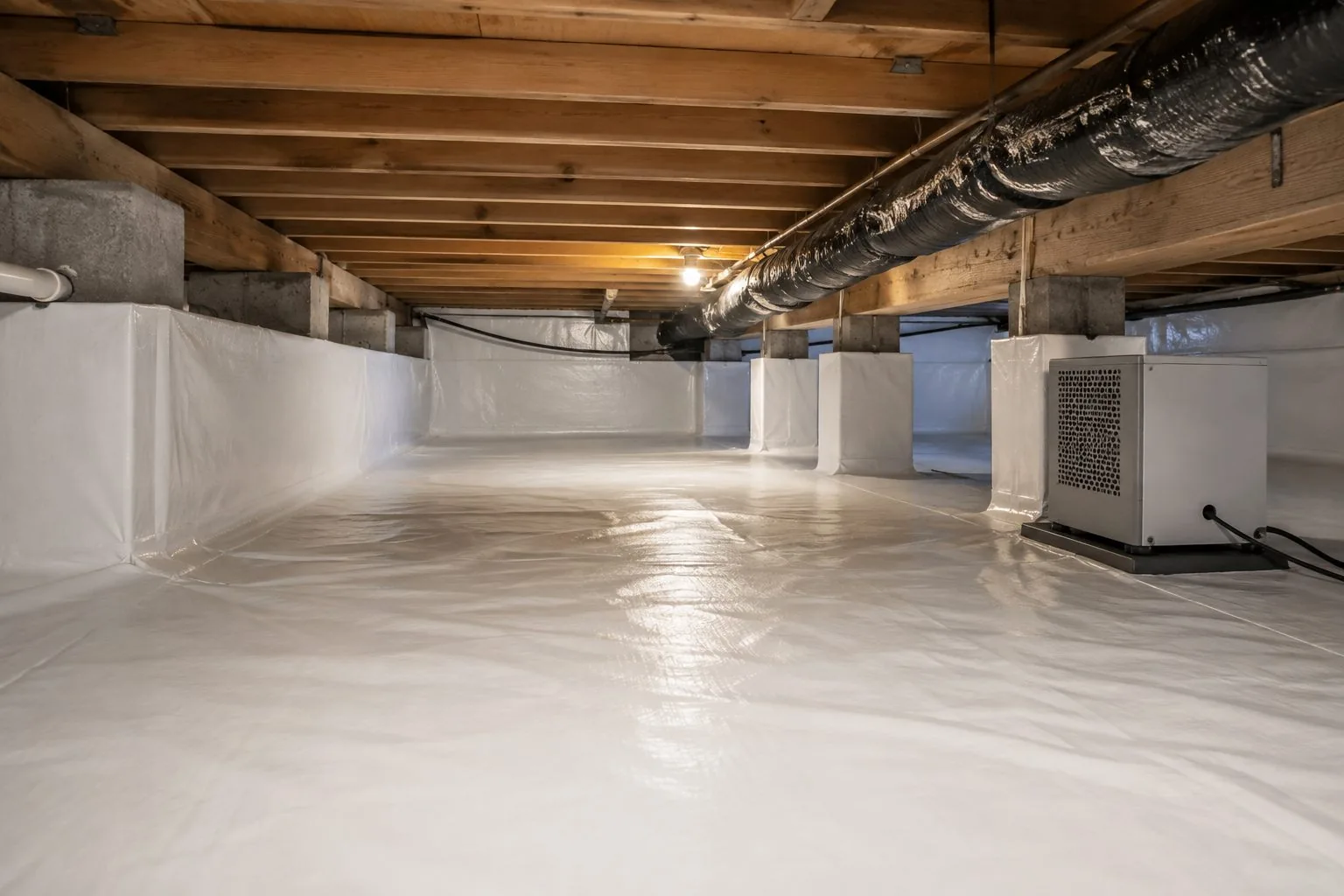
An open, dirt-floor crawl space is a direct pipeline of humidity, radon, and cold air into the house above it. Westfield homes see this regularly, largely for the same soil and drainage reasons common throughout Hamilton County.
Westfield's newer subdivisions sit on Hamilton County clay that hasn't fully settled the way older lots have, which is why we see more early-stage crack and drainage calls here than deep-settlement repairs. We regularly work near Grand Park area and Wood Wind, and across the rest of Hamilton County.
What we see most in Westfield traces back to the ground under it — recently disturbed clay fill that's still compacting under newer construction — paired with a housing stock young enough that original grading is still the main variable. That's a common thread in the crawl space encapsulation calls we take from the Grand Park area out across Hamilton County. It's a regular call here, though Crack Repair tends to come up just as often given Westfield's recently built homes where the soil hasn't fully settled yet.
Newer Westfield lots are generally straightforward for crews to access, with less mature landscaping in the way than older neighborhoods see.
Musty smell noticeable in rooms directly above the crawl space
Visible mold or a white, fuzzy growth on floor joists or subfloor
Sagging or spongy spots in the floor above
Higher-than-expected humidity or condensation on ductwork and pipes
Increased pest activity — crawl spaces are a common entry point
Noticeably higher energy bills from an unsealed, uninsulated crawl space
A 12–20 mil reinforced liner covers the entire floor and runs up the foundation walls, fully sealing the space from ground moisture.
Foundation vents are closed and insulated, and the access door is replaced with a sealed, insulated unit — stopping humid outside air from entering in the first place.
A crawl-space-rated dehumidifier maintains humidity in a safe range automatically, which is what actually stops mold from coming back after the initial cleanup.
Where standing water is a factor, a dedicated sump pump is set into the encapsulation system so ground water is captured and removed rather than trapped under the new barrier.
A full encapsulation — vapor barrier, sealed vents, insulated door, and dehumidifier — for an average Central Indiana crawl space typically runs $4,500–$9,000. Adding a dedicated sump pump or structural repairs increases the range. Get a straight answer, in writing, before you spend anything.
We'll call to confirm a time \u2014 usually within one business day.