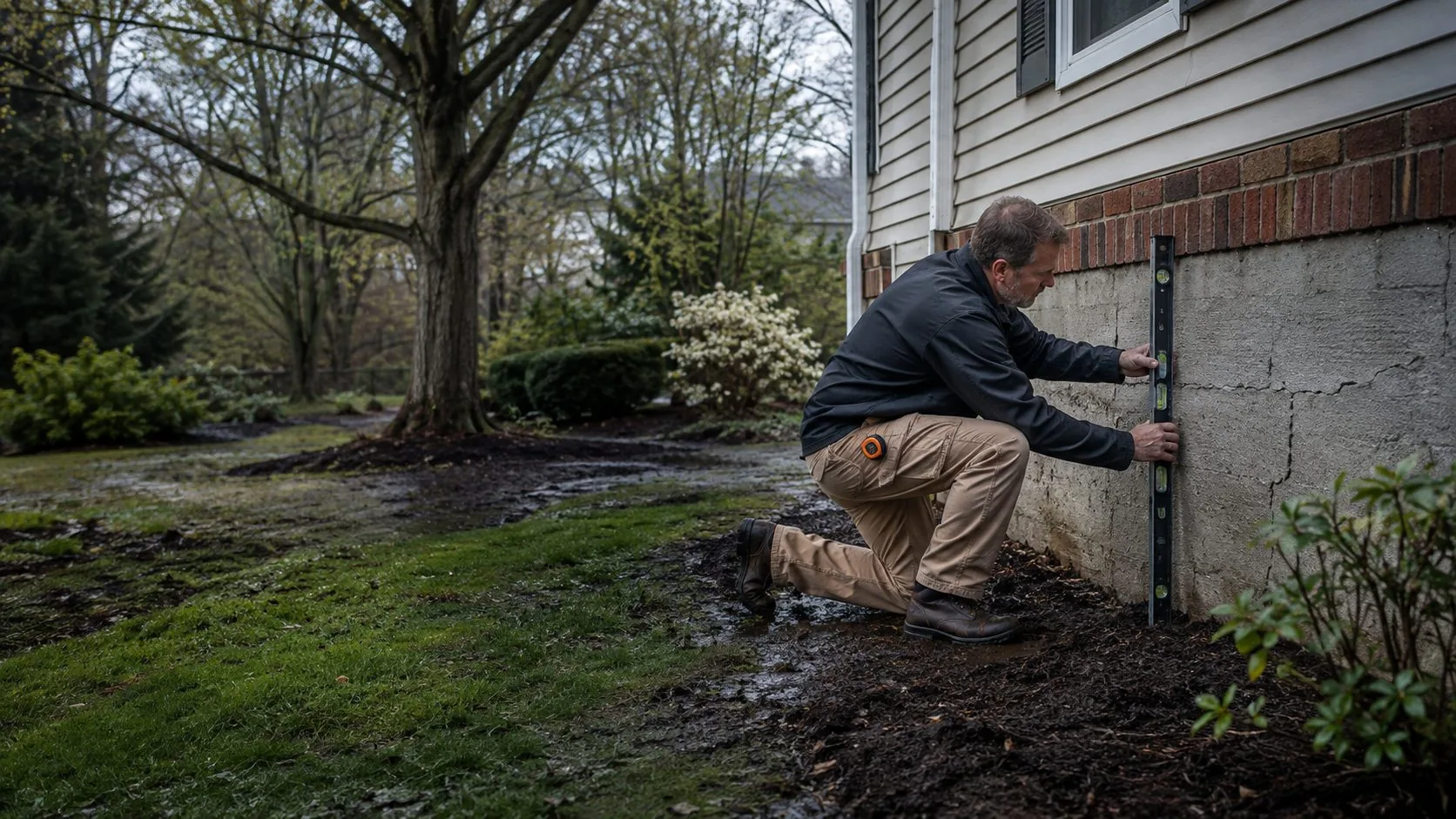
Not every crack needs piers — but every crack needs an honest answer about which kind it is. Lawrence homes see this regularly, largely for the same soil and drainage reasons common throughout Marion County.
Lawrence covers a wide range of housing ages along the northeast side of Marion County, from post-war homes near Fort Ben to newer construction closer to the Geist area. Fort Harrison area and Oaklandon are areas we're in often, along with the broader Marion County.
In Lawrence, the driver is usually the ground itself: a wide span of soil conditions from older settled ground near Fort Harrison to newer fill closer to Geist. Combined with everything from decades-old homes to recent builds, side by side, that's the pattern behind most of the foundation crack repair calls we run near the Fort Harrison area and the rest of Marion County. We see it steadily in Lawrence, alongside Basement Waterproofing, which fits the area's a wide span of housing ages, which means a wide span of causes.
Lawrence covers enough of a range that access varies by street — older sections mean working around mature landscaping, newer ones don't.
A vertical crack running down (or up from) a poured concrete foundation wall
Water seeping through a crack after heavy rain
A crack you can see daylight through, or one wide enough to fit a coin
A horizontal crack, or a stair-step pattern in a block wall (get this looked at promptly)
A crack that's grown noticeably wider over a few months
Efflorescence (white mineral deposit) forming specifically along a crack line
Rigid, high-strength epoxy is injected under pressure to fully bond the crack, restoring structural continuity to the wall. Used on cracks where strength matters, not just water sealing.
Expanding polyurethane fills the crack and remains slightly flexible, making it the right choice for pure waterproofing on cracks that may see minor seasonal movement.
For accessible cracks, exterior-grade sealant and membrane patching adds a second line of defense above and beyond the interior injection.
If a crack is a symptom of wall pressure rather than simple shrinkage, we'll recommend carbon fiber straps or wall anchors instead of — or in addition to — injection.
Standard epoxy or polyurethane injection on a shrinkage crack typically runs $300–$1,200 per crack. Cracks tied to structural movement, which require reinforcement rather than injection alone, run higher. Get a straight answer, in writing, before you spend anything.
We'll call to confirm a time \u2014 usually within one business day.