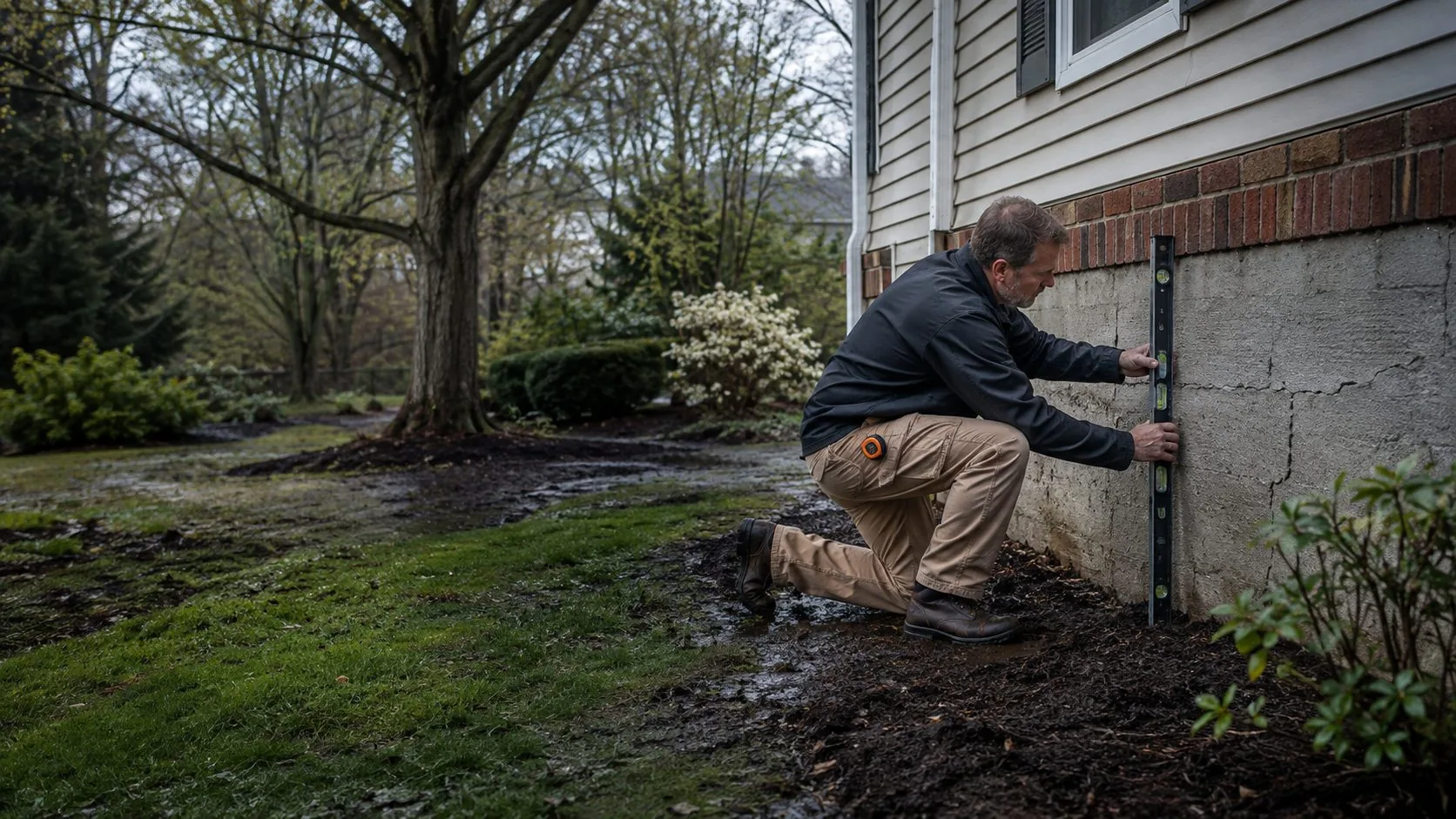
Settling, cracking, or a sloping floor doesn't fix itself — and it rarely stays the same size for long. Whitestown homes see this regularly, largely for the same soil and drainage reasons common throughout Boone County.
Whitestown is one of the fastest-growing towns in the state, and most of the foundation work we do here is on homes under fifteen years old — usually drainage or early settlement, not structural failure. We regularly work near Anson and Newport Village, and across the rest of Boone County.
In Whitestown, the driver is usually the ground itself: some of the newest compacted fill soil in the metro, still settling under recent construction. Combined with a housing stock young enough that original grading is still the main variable, that's the pattern behind most of the foundation repair calls we run near the Anson development and the rest of Boone County. It's a regular call here, though Crack Repair tends to come up just as often given Whitestown's mostly newer construction still working through its first years of settling.
On Whitestown's newer construction, access is usually easy — younger landscaping and open yards mean less to work around, and jobs tend to move quickly once scheduled.
Doors and windows that stick or won't latch the way they used to
Cracks in drywall, especially stair-step cracks over doorways and windows
A visible gap where the floor meets the wall, or a floor that feels like it slopes
Cracks in the foundation wall itself, especially horizontal ones (these get priority attention)
Bowing or leaning basement walls
Chimneys or porches separating from the main structure
Steel piers driven to load-bearing soil or bedrock, then used to lift and stabilize a settled foundation. Typically the go-to for heavier structures where deep, stable soil is available.
Screwed into the ground rather than driven, helical piers work well for lighter structures, additions, and porches, and can be installed with more compact equipment.
For bowing basement walls, anchors extend into stable soil beyond the house to pull the wall back over time, while carbon fiber straps reinforce walls with early-stage bowing without excavation.
For sunken slabs, garage floors, and patios, polyurethane foam injection or slab piers lift concrete back to grade, usually in a single day with no demolition.
Minor crack injection can run $300–$1,200. Full pier systems for a settled corner or wall typically land between $4,000 and $15,000+ depending on the number of piers and depth to load-bearing soil. No pressure, no upsell — just an honest read on what your home actually needs.
We'll call to confirm a time \u2014 usually within one business day.