A basement leak that appears during or after rain often points to water outside the foundation, while water that continues in dry weather near pipes, appliances, or a bathroom can point to plumbing. The pattern is a clue, not proof. Document the timing and location, then address urgent water safely before choosing the right specialist.
Four clues that narrow the source
1. Timing
Rain timing is valuable. If water appears after a storm, during snowmelt, or when the ground has been saturated for days, map that pattern. If it continues when conditions are dry and changes when a fixture runs, plumbing moves higher on the list.
2. Location
Water at a pipe penetration, below a supply line, around a water heater, or near a laundry connection deserves a plumbing investigation. Water entering at a floor-wall joint, a crack, or a single basement corner may be influenced by exterior drainage or the soil around the foundation. Either pattern can have exceptions.
3. Water character and volume
Note clarity, odor, speed, and whether a pump is cycling. Do not touch unknown water near electrical equipment. A sudden large flow can have a different urgency from a damp line that slowly returns after a storm.
4. What changed outside
Look at the gutter outlet, downspout extension, landscaping, driveway grade, and discharge line. Water that is being directed toward the house can make a small defect behave like a large leak. Our downspout guide explains why the outlet needs as much attention as the gutter itself.
What to do before you diagnose further
- Keep people away from water near outlets, panels, or electrical equipment. Call an electrician or emergency service when safety is uncertain.
- Take photos and short notes before moving belongings.
- Stop an active plumbing fixture if you can do so safely; avoid opening walls or operating equipment you do not understand.
- Move dry belongings away from the affected area and begin safe drying once the source is controlled.
- Do not paint, caulk, or cover an active leak before its path is understood.
The EPA advises prompt drying and moisture control because damp materials can support mold growth. A wet finished basement is a restoration issue as well as a source-finding issue.
Who to call first
Call a plumber first when water is connected to a visible pipe, appliance, fixture, sewage smell, or dry-weather leak. Request a foundation or waterproofing assessment when the pattern aligns with rain, exterior runoff, wall cracks, a floor-wall joint, or a sump and drainage system that cannot keep up. In some homes, both calls are reasonable: a plumbing leak can coexist with a drainage problem.
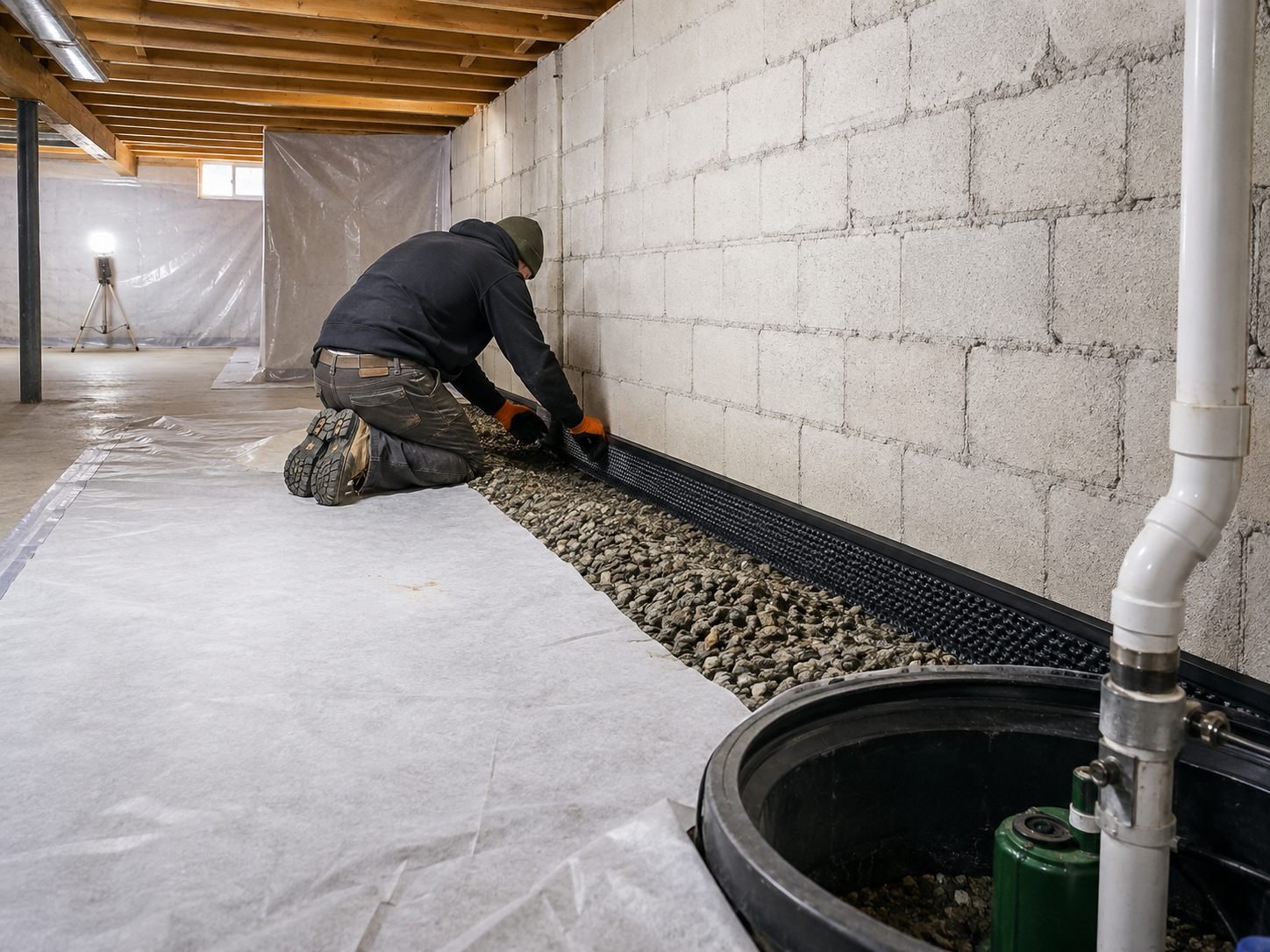
For water that reaches the seam where the floor meets the wall, read our focused guide to cove seepage. If the sump pump is part of the story, test it safely with this pre-storm checklist. When the source is exterior water, our basement waterproofing page outlines the systems that may be considered after an inspection.
What not to assume
A dry day does not prove a foundation is sound, and a wet basement does not automatically mean a structural repair is needed. Keep the evidence separate from the conclusion. The pattern helps a qualified person inspect the right places and recommend a repair that matches the actual path of water.
Frequently asked questions
Can groundwater come up through a basement floor?
Water can reach a basement through several below-grade paths. An inspection looks at the location, timing, drainage route, and wall or slab condition rather than relying on one symptom.
Does a dehumidifier fix a basement leak?
A dehumidifier can improve indoor humidity, but it does not stop liquid water from entering through a drainage, plumbing, or foundation issue.
Should I wait for the next storm to investigate?
No. Document the condition now and inspect easy exterior drainage controls. A qualified assessment can use the record even when the wall is dry.
Source: The EPA’s basement moisture guidance recommends correcting water problems before finishing a basement and names downspout routing and grade among the possible controls.