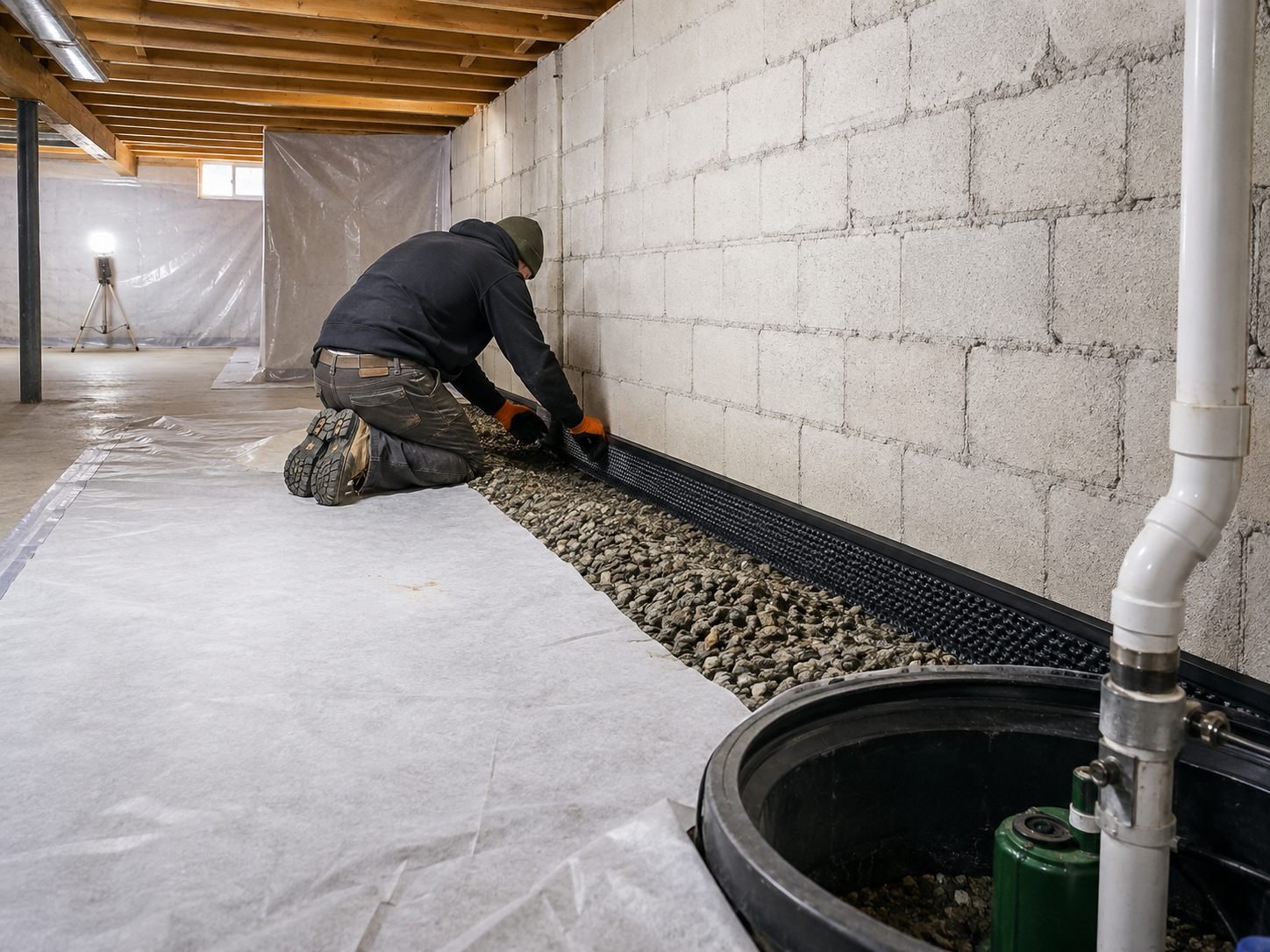
An interior French drain, often called interior drain tile, can be a good fit when water repeatedly reaches the inside perimeter of a basement and needs a controlled path to a sump system. It manages water after it arrives at the foundation area. It does not by itself correct every exterior drainage defect, plumbing leak, or structural problem.
What an interior drain is designed to do
Interior drainage is installed at or near the inside perimeter of a basement floor. Its job is to collect water that reaches that area and direct it to a sump basin, where a pump can move it to an appropriate discharge route. The details matter: floor construction, wall condition, drainage path, sump capacity, check valves, and discharge all affect whether the system works as intended.
It is a water-management tool, not a magic label. A good recommendation explains the observed path of water and why this route is preferred over simpler exterior corrections or a different repair.
Patterns that may justify a drainage assessment
- Water repeatedly appears at the floor-wall joint after rain.
- There is persistent dampness around the perimeter even after gutters and downspouts are corrected.
- A sump pit exists but cannot collect or discharge water reliably.
- A finished basement needs a durable plan before it is rebuilt.
These are reasons to inspect, not promises that an interior drain is the answer. For a one-corner problem, start by checking the roof runoff and grade. Our downspout drainage checklist walks through the homeowner checks. For water at the seam itself, see our cove-seepage explainer.
What an interior drain does not solve on its own
It cannot stabilize a bowing wall, repair an active plumbing leak, restore a damaged footing, or turn a failed pump into a reliable one. It does not make it sensible to ignore a downspout that dumps water beside the foundation. Those problems can require their own work before or alongside drainage.
This distinction protects you from a broad scope that does not match the building. If cracks, displacement, or bowing are visible, start with a foundation repair assessment. If the wall is stable but water is the primary symptom, review basement waterproofing approaches with the inspector.
Questions to ask before approving a drain
- Where is water entering or collecting, and what observations support that conclusion?
- What exterior drainage corrections have been checked first?
- How will the drain reach the sump, and where will the sump discharge?
- What happens if the primary pump loses power or cannot keep up?
- How will the floor and wall be restored, and what maintenance is expected?
Ask for a clear scope that names the affected area rather than a vague promise to “waterproof everything.” If a pump is part of the plan, read our guide to battery backup decisions and test the primary before storm season.
Interior drainage versus exterior work
Exterior work can be appropriate when there is an exterior condition to correct and access allows it. Interior drainage may be considered when water needs a collection path on the inside or exterior excavation is not the preferred approach. Neither choice should be made from a photo alone. The foundation, grade, utilities, landscaping, drainage destination, and water pattern all affect the decision.
Frequently asked questions
Is an interior French drain the same as a sump pump?
No. The drain collects and conveys water; the sump pump moves collected water out of the basin. A system needs both parts to be planned together.
Will an interior drain stop every basement smell?
It can help with a moisture source when that source is below-grade water. Odors can also involve humidity, plumbing, or materials already affected by moisture.
Can I finish my basement after drainage work?
Only after the water-management plan, drying, and materials are appropriate for the space. The EPA advises addressing moisture problems before converting a basement into living space.
Source: The EPA’s moisture-control guidance discusses both exterior drainage and interior drain tile with a sump pump as possible ways to manage water, depending on site conditions.