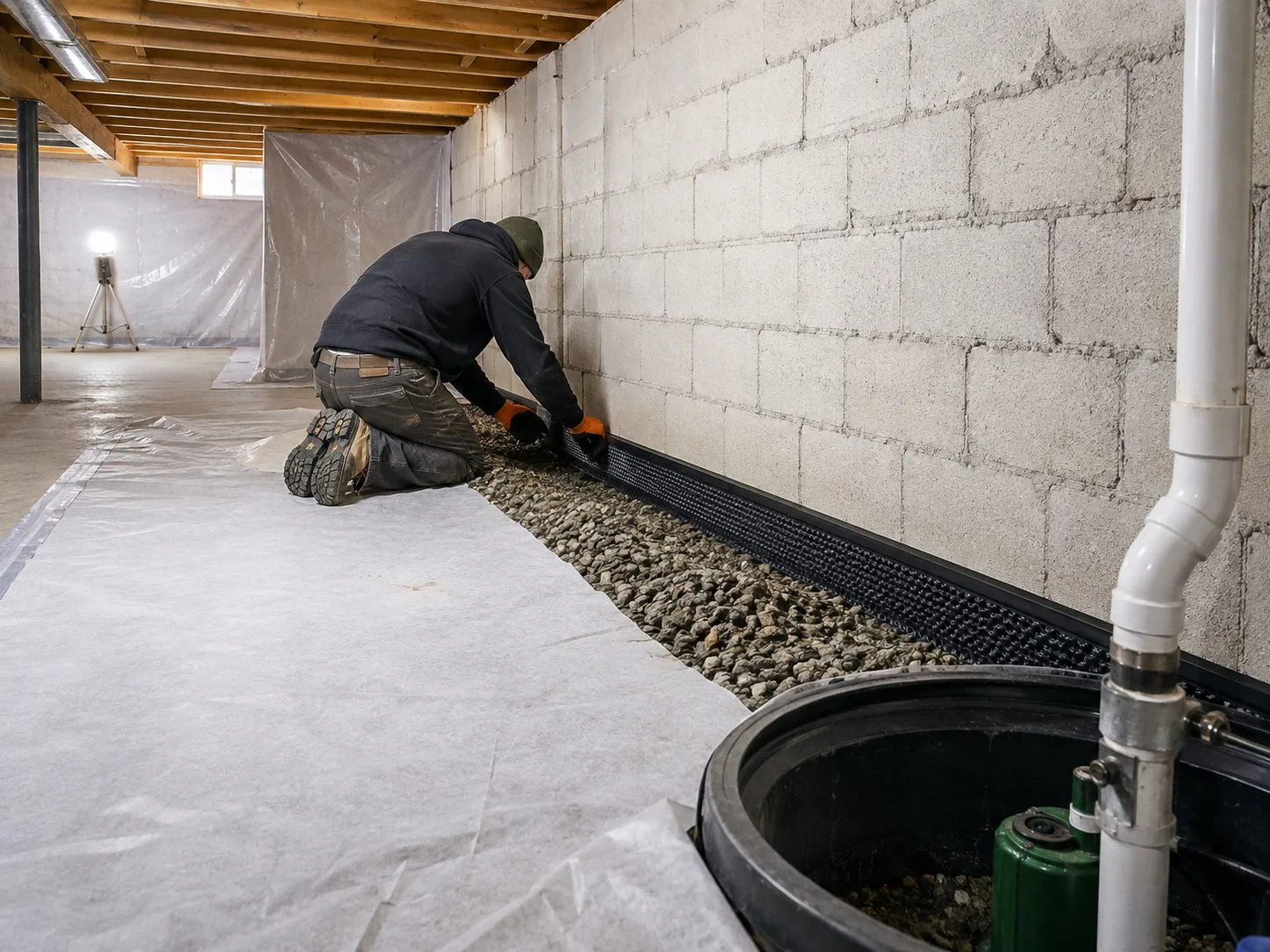
The pump that's supposed to protect your basement is only as good as the day it was last tested. Speedway homes see this regularly, largely for the same soil and drainage reasons common throughout Marion County.
Speedway's compact, established housing stock includes a lot of mid-century homes where basement waterproofing and sump pump upgrades are the most common calls we run. Main Street district and Historic Speedway are areas we're in often, along with the broader Marion County.
Speedway's ground is settled urban Marion County soil under a mostly mid-century housing stock, and because the area has homes old enough that original systems are due for a look, that's usually the starting point when we're called out for sump pump installation near the Main Street district or elsewhere in Marion County. In fact, Sump Pump Installation is the single most common call we get from Speedway homeowners.
Most Speedway jobs on this kind of housing stock are predictable to schedule — the work itself is well understood on homes this age.
No sump pump in a basement that's below the water table or has a history of dampness
A pump that hasn't been tested in over a year
Rust, corrosion, or a cracked basin around your existing pump
A pump that runs constantly even without recent rain
No battery backup on a home that's lost power during a storm before
A discharge line that empties too close to the foundation, sending water right back
Properly sized submersible pump set in a new or existing basin, with a check valve and correctly routed discharge line that carries water well away from the foundation.
A second pump powered by a dedicated battery, activating automatically if the primary pump fails or the power goes out — exactly the scenario that causes most preventable basement flooding.
For homes with reliable municipal water pressure, a water-powered backup pump runs off your water line with no battery to maintain, as a second layer alongside the primary pump.
For basements with a history of heavy water or a large drainage area feeding the basin, dual primary pumps handle volume that a single pump can't keep up with.
A standard primary pump install typically runs $650–$1,800. Adding a battery backup system brings most installs to $1,500–$3,200. We'll tell you plainly if this is a small fix or a bigger one, and why.
We'll call to confirm a time \u2014 usually within one business day.